The Independent Uganda: You get the Truth we Pay the Price



Trump’s new policy potentially reshapes global migration patterns for skilled workers
NEWS ANALYSIS | THE INDEPENDENT & AGENCIES | Ugandans wishing to travel to the U.S. for work must now contend with new heightened fees announced on Sept.19 the President Donald Trump.
While signing the executive order that imposed a new $100,000 (Approx. Shs350 million) application fee for H-1B visas, President Trump said the new measure will ensure only “great workers” enter the United States.
Companies in the U.S. wishing to hire foreign workers will pay this fee on top of existing vetting charges, with the administration still deciding whether to collect the full amount upfront or annually. Previous H-1B processing costs typically amounted to a few thousand dollars. Trump’s broader immigration strategy includes enhanced enforcement measures and restrictions targeting legal immigration pathways that have traditionally served developing countries’ professional classes.
More information was provided by U.S. Commerce Secretary Howard Lutnick told journalists said the fee hike was a deliberate strategy to eliminate what the administration considers lower-skilled training positions while preserving opportunities for highly skilled workers.
“A company that wants to buy an H-1B visa… it’s USD 100,000 per year,” Secretary Lutnick said, “If you have a very sophisticated engineer and you want to bring them in because they have expertise, then you can pay $100,000 a year for your H-1B visa.”
“No longer will you put trainees on an H-1B visa – it’s just not economic anymore,” he added, “If you’re going to train people, you’re going to train Americans.”
The proclamation also establishes a “Trump Gold Card” program requiring $1 million investments for permanent residency, creating what critics describe as a two-tier system favouring wealthy applicants over merit-based selection criteria.
What it means for Ugandans
Typically, a Ugandan citizen seeking a U.S. H-1B visa must go through their prospective employer. The prospective employer petitions for the visa on your behalf of the prospective employee. If the petition is approved, the prospective employee applies for the visa at the U.S. Embassy in Uganda.
Ugandans seeking to work long-term in the U.S. can currently also do so on an immigrant visa. Under this arrangement, a U.S. citizen, a lawful permanent resident, or a prospective U.S. employer is needed to sponsor an approved immigrant petition. Only if this is successful can the Ugandan seeking long-term work can apply for a visa.
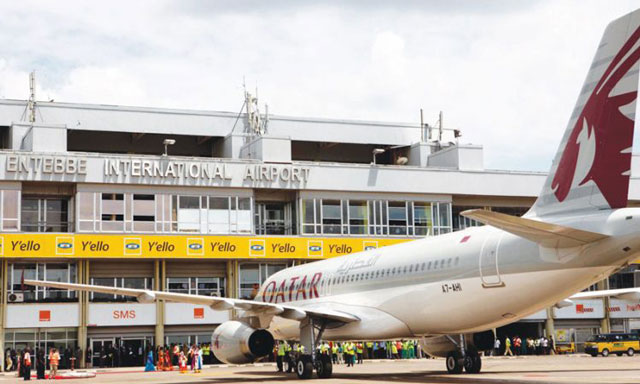
Ugandans wishing to travel for business, leisure, work, or other reason already must contend with tough new rules imposed recently by the Trump administration, including significantly shorter visa validity periods to three months. In July 2025, the U.S. reduced the validity of non-immigrant visas for Ugandans to three months, marking a shift from previous multi-year visas.
Certain employers are exempt from these caps. These include institutions of higher education, nonprofit and governmental research organisations, those who have already received H-1B visas, and applications to work in the Northern Mariana Islands and Guam until December 31, 2029, and Chilean and Singaporean nationals based on the Chile–United States and Singapore–United States Free Trade Agreements which establish separate annual quotas for them. There is also an E-3 visa is specifically designated for Australian citizens with an annual cap of 10,500 visas per year.
Threat to career pathway
The H-1B is a temporary and non-immigrant US visa that allows companies in the U.S. to bring in highly skilled workers from abroad. It was introduced in the 1990s under Republican President George HW Bush.
The H-1B is “the largest temporary work visa” programme in the U.S. There is an annual cap on the number of H-1B visas guaranteed, set to 65,000 H-1B visas per fiscal year. It is decided by a lottery system, which randomly selects when the number of visa petitions exceeds the cap.
The foreign worker must be employed in a specialised occupation with at least a bachelor’s degree from the fields of information technology, medicine and publication.
The employer sponsors foreign workers. The visa is granted for three years but can be extended to six years.
Trump’s new policy on it has been in the works for a long time.
As early as 2016, Trump was calling it “very, very bad” for American workers.
Months before the end of his first term as president in 2020, Trump imposed a temporary ban on H-1B visas, which was later struck down by a federal court.
But just days to his swearing-in as president again in 2025, the U.S. president-elect appeared to throw his weight behind the visa scheme, saying: “It’s a great programme.”
“I have many H-1B visas on my properties. I’ve been a believer in H-1B,” he reportedly told New York Post.
With the latest US$100,000 fee announcement, Trump appears to have flip-flopped again.
Foreign professionals have traditionally leveraged H-1B visas to secure positions in American firms. Approximately 70,000 skilled professionals leave Africa annually. Segregated numbers for Ugandan are not available.
Various commentators have said the high new application fee for H-1B visas threatens to a crucial pathway for mainly technology professionals seeking opportunities in the United States.

The policy constrains a key path to legal immigration widely used in Silicon Valley, affecting technology hubs globally that supply talent to American companies.
American and Indian tech companies – and a few consulting firms – dominate the scheme. Six of the top 10 beneficiaries of the scheme in 2024 were U.S. companies, according to the National Foundation for American Policy (NFAP), a nonpartisan think tank on trade and immigration: Amazon, Cognizant, IBM, Microsoft, Google and Meta. Three were Indian: Infosys, TCS and HCL. Capgemini, a French tech and consulting firm, rounds up the list.
Musk has since fallen-out with Trump but back then, his electric car company Tesla was a major beneficiary of the H-1B visa policy. In 2024, Tesla won 742 new H-1B visas through the lottery, more than double the 328 it secured in 2023. In addition, Tesla had another 1,025 existing H-1B visas extended in 2024, according to an Al Jazeera report from the period.
“The reason I’m in America along with so many critical people who built SpaceX, Tesla and hundreds of other companies that made America strong is because of H-1B,” Musk posted at the time.
Musk was born in South Africa and previously held an H-1B visa before he became a naturalised U.S. citizen.
Around 70 percent of H-1B visa recipients are from India and another 10 percent are from China. The H-1B visa program is subject to an annual cap of 65,000 visas, with an additional 20,000 visas available for applicants holding advanced degrees from U.S. institutions.
Time for alternative destinations
The policy’s long-term impact will depend on whether alternative destinations such as Canada, the United Kingdom, and European Union countries adjust their immigration policies to attract talent diverted from American pathways, potentially reshaping global migration patterns for skilled workers.
Also to possibly be affected will knowledge, skills, and capital and technology transfer from America to the rest of the world since professionals have previously travelled to the U.S. on H-B1 visas, acquired skills and capital before return to their home countries.
Other commentators have argued that the Visa fee hike could benefit other countries by reducing on brain drain, especially professionals. It could make countries reduce dependency on foreign opportunities for career advancement and encourage professionals to remain in their countries of origin, especially if governments offer domestic development of incentives. It could also lead to countries strengthening local innovation capacity.
The new fees will be implemented alongside enhanced vetting procedures by the Department of Homeland Security and are to be rolled out within weeks.
Companies with existing H-1B workers may face immediate impacts when renewal periods arrive, as the new fee structure will apply to all applications processed after implementation.
The administration framed the changes as protecting American workers and generating revenue for the U.S. Treasury. Officials argue that free or low-cost H-1B visas encouraged companies to hire foreign workers instead of training Americans.
“The idea is to bring in high earners, people with money,” Lutnick said, contrasting this with what he described as previous policies that brought in “low earners” who “take jobs from Americans.”
The H-1B changes represent part of broader Trump administration efforts to reshape US immigration policy around economic contribution rather than humanitarian or family-based considerations.
While maintaining that highly skilled workers remain welcome, the administration clearly intends to raise barriers significantly, ensuring that only positions with substantial economic value justify the cost of foreign hiring.