 The Independent Uganda: You get the Truth we Pay the Price


In Uganda, an estimated 5,620 deaths were attributable to antimicrobial resistance in 2021, with the greatest number among children aged under five years
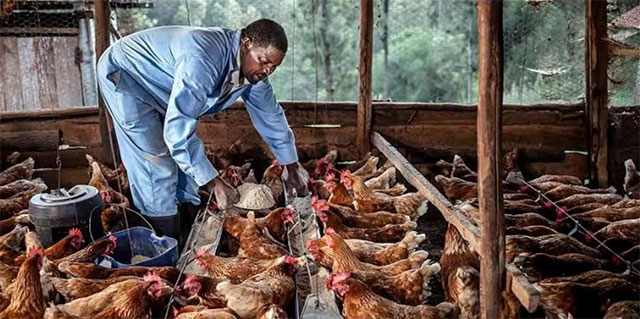
SPECIAL FEATURE | JOHN MUSENZE – SciDev.Net | In the Mbarara district of Western Uganda, poultry farmer Susan Ddamulira has managed a farm of 2,000 birds for four years without a single visit from a vet.
She admits she often uses antibiotics—for disease prevention, treatment, and out of fear of an outbreak.
“If cough breaks out here, I can lose everything in just days,” Ddamulira said.
In chickens, coughing is often a sign of a more serious respiratory infection.
“That is why we use antibiotics early because they are like an insurance—cheap and easier to get than even looking for a veterinary doctor,” the farmer explains.
Ddamulira says waiting for a vet is not an option: “You treat first, then think later.”
In Uganda, veterinary doctors are scarce, so those available command a high price—more than 100,000 Ugandan shillings (about US$30) just for an inspection, according to Ddamulira.
She draws on her experience and that of other farmers to determine what antibiotics are needed for her birds.
“Sometimes I put them in water or into the feeds, at times I break them and feed my birds myself, but I don’t use drugs because I want to—I use them because I have no one else to turn to,” she explains.
“Feeds are expensive, vets are expensive, so these drugs are very cheap, easy to use and easily accessible and they save our farms.”
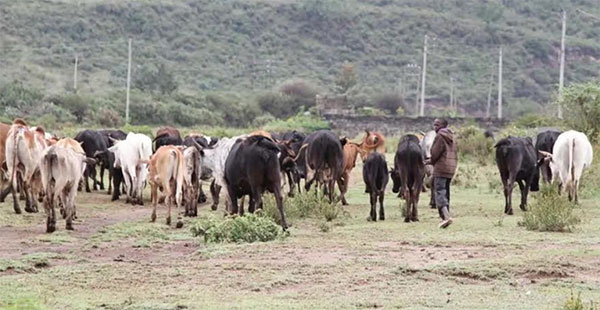
Ddamulira’s routine of treating the first sign of illness without veterinary guidance is common across the livestock sector in Uganda and neighbouring Kenya, as is the use of antibiotics as growth promoters.
Drug resistance crisis
However, coupled with poverty, weak regulation and limited veterinary access, such practices are compounding a serious and growing drug resistance crisis.
New research highlights antimicrobial resistance—where disease-causing bacteria and viruses no longer respond to the medicines designed to treat them—as a top One Health research priority.
The One Health Horizon Scanning research, an evidence review and stakeholder consultation managed by the One Health Hub of the agricultural research organisation CABI (the parent organisation of SciDev.Net), calls for multisectoral strategies across healthcare, agriculture, and ecosystems to tackle the problem.
The report notes that unregulated use of veterinary antibiotics, as well as weak surveillance infrastructure, is deepening the crisis in low- and middle-income countries.
Experts warn that without stronger oversight of agro-vet outlets and rural pharmacies, livestock keepers will continue to access antibiotics without guidance, a major driver of resistant pathogens in smallholder systems.
In Africa, antimicrobial resistance has become one of the continent’s biggest public health threats. According to Africa CDC, it kills more people than HIV-AIDS, tuberculosis, and malaria combined, with a mortality rate of 27.3 deaths per 100,000, the highest globally.
Without urgent action, the World Health Organization (WHO) projects that 4.1 million people across Africa could die as a result of antimicrobial resistance by 2050.
Carol Nyamor, a public health expert at Uganda’s Ministry of Health, says the story of drug resistance in hospitals begins long before a patient arrives at the health facility—on farms like Ddamulira’s.
It is driven by wrong dosages, self-prescription, preventative use and farmers turning to cheaper drugs, Nyamor explains.
“They don’t consult vets. They go with hearsay. They buy cheaper versions and give lower doses,” she says.
“That is how resistant bacteria develop and then find their way to humans through eggs, chicken, meat and even soil.”
According to Nyamor, doctors are increasingly seeing patients who are not responding to penicillin or fluoroquinolones like ciprofloxacin—antibiotics used to treat serious, life-threatening illnesses. “That failure tells us resistance is already here,” she adds.
In Uganda, an estimated 5,620 deaths were attributable to antimicrobial resistance in 2021, with the greatest number among children aged under five, according to research by University of Washington.
Farming pressures
Patrick Vudriko a public health expert on antimicrobial resistance at Uganda’s Makerere University has spent years observing the factors influencing it.
He has seen farmers navigate disease, financial pressures, and limited veterinary support.
“The most common pressures pushing farmers toward antibiotic misuse are the conditions under which they keep their animals,” he explains.
“Many are trying to reduce diseases that arise from poor environmental conditions, increase growth rates, reduce mortality once infection sets in, or compensate for vaccination failures.”
Rising feed costs, fragile poultry breeds, unpredictable weather patterns and overcrowding on small farms form a perfect storm, driving farmers to antibiotics for survival, says Vudriko.
He says the use of antibiotics to prevent infections is widespread, adding: “Some farmers even medicate chicken sold at markets in cages just to prevent death while awaiting customers.”
In rural areas, the absence of vets means farm workers become “untrained clinicians”, making decisions on treatments, says Vudriko.
Antibiotics have become a frontline defence rather than last resort, he adds, with poultry and dairy farmers among the biggest consumers.
Uncontrolled dispensing
While Uganda’s regulatory system is not blind to the problem, the gaps remain wide enough for poor-quality drugs, counterfeits, and uncontrolled dispensing to thrive, according to Vudriko.
He sees a need to strengthen quality assurance of veterinary antibiotics through regular post-market surveillance, plus frequent inspections at veterinary drug outlets.
In Kenya, the surge in antimicrobial use is particularly pronounced in commercial farming where thousands of animals are packed into tight spaces.
Antimicrobial resistance begins on farms, in crowded livestock sheds, and in the unseen gaps of national health systems, according to Sam Kariuki, one of East Africa’s leading infectious disease researchers.
“Antibiotics are used in both humans and animals, but in livestock, especially intensive farming, you often find the greatest pressure,” says Kariuki.
“To prevent losses or even quicken growth […] many turn to antibiotics long before they are actually needed.”
Rather than killing the bacteria, low doses encourage resistance, he says, adding: “That is the danger of prophylactic [preventative] and growth-promotion use.”
Richard Lukandwa, a pharmacist at Rosewell specialist hospital in Uganda, says clinics are at every corner in Uganda and Kenya, often selling drugs without a prescription.
“People at times just point to the drugs they want, what worked for them or a friend previously or what is cheap and because the pharmacist wants to make sales, they will just give it to them,” says Lukandwa.
Meanwhile, he says, cases of antimicrobial resistance occurring in hospitals are going undocumented.
Surveillance gaps
Kariuki says studies in Kenya and Uganda paint a mixed picture, with some areas recording extremely high resistance in livestock, while others are moderate or low.
Pathogens such as E. coli, Salmonella and Acinetobacter circulating in smallholder systems show more than 50 per cent resistance to commonly used drugs, according to Kariuki.
However, he warns of worrying gaps in surveillance: “We don’t have routine surveillance because there are no dedicated budgets. Any surveillance system costs money, but it is a long-term investment that protects antibiotics and saves lives.
“Where surveillance exists, it is often poorly coordinated, lacks quality control and suffers from weak laboratory capacity. Without strong labs, you simply cannot detect or measure resistance.”
According to the Horizon Scanning report, a major barrier to tackling antimicrobial resistance is the lack of integrated surveillance systems capable of tracking resistance trends in humans, livestock, crops and the environment.
Most countries collect this data separately, if at all, making it difficult to understand how resistant bacteria circulate between farms, households and clinics.
The human cost, Kariuki argues, is severely underestimated. Kenya, like Uganda, faces high mortality among children and hospitalised patients, but both countries lack data.
“People may die of pneumonia, sepsis or TB, but rarely does anyone document that it was drug-resistant pneumonia or drug-resistant sepsis,” he explains.
Kariuki calls for more community education, school-based learning, and empowering consumers to demand prescriptions before buying medicines.
“We have the laws against misuse of antibiotics but enforcement is the biggest problem,” he says.
“We must empower communities to understand that antibiotics are life-saving tools. Once they stop working, lives—especially those of children—are at risk.”
Incentives for change
Phil Taylor, an expert on plant pathogens at CABI who has carried out research on antimicrobial resistance in crops in low- and middle-income countries, stresses that the use of antibiotics on farms is rarely about ignorance, but rather survival.
“There is no personal advantage for a farmer not to use antibiotics,” he explains.
By contrast, “the disadvantage of resistance is shared by the whole population, just like climate change”, he adds.
He says that while his research found no evidence of antibiotic use in crop production across Africa, behaviours seen in other regions offer important lessons. Where farmers use antibiotics on crops, they often do so without realising the practice is controversial.
Taylor believes voluntary change is unlikely and stresses that policy change is essential.
He adds: “Unless farmers gain a benefit through legislation, incentives or higher prices, they will not stop.”
******
This article was produced by SciDev.Net’s Sub-Saharan Africa English desk.


Yes, here in Uganda, people who have never studied sciences (infact primary school leavers or drop outs), are handling agricultural medicines for both plants and animals, and they take things for granted. I have been worried by this kind of recklessness. Medicines are sold in markets without housing, exposing them to radiation from the sun. Persons spray gardens without protective clothing/masks, children administer the medicines in homes, etc.
t takes a trained scientist (one with the understanding of scientific phenomena) to observe the necessary precaution in science solutions to farming problems. But here, plant/animal treatment is taken for granted. Only treatment of humans is taken a bit more seriously, but even then, there is evidence of medicines for humans going in the hands of quacks in rural settings.
There is a need to have all plant and animal medicine handling completely come under control of trained and certified persons (in both sale and administration), by law, and have farmers be forced to pay for services of trained persons.
This is a leadership problem, and it badly needs a leadership solution. Unfortunately, many leaders are not trained in sciences, thus, those involved in national of local government deliberations, are blind to scientific phenomena.
There are many other overlooked scientific phenomena that put public health at risk. One neglected example is quality of rental housing and it’s human waste management in towns. This has lead to overwhelming cases of ENT allergies and strokes.
I and my family almost died of sicknesses contracted from poor rental housing when I had to rent to serve a government station having lost opportunity for housing in a few staff houses in the station. I still treat the family monthly, even after relocating to a fair housing. Every change of station has this risk
As housing kills, landlord remain free to use unskilled builders and hurriedly put up ‘housing’ with poor murram foundations and poor cement mixtures leading to damp housing, everywhere. All they want to is to complete a house and make money. Due to ignorance of the users, clients rent poor housing and fall sick unaware that the problem causing sickness is the poor housing. Due to corruption in handling of constructions, even housing in government stations may not be safe from this kind of thing . Everywhere, one falls a victim of poor housing, but has to pay rent to the landlord, and have no where to run to for a remedy. Due lack of studies, symptoms from housing health problems are mis-understood by medics as some kinds of disease out-breaks. The ENT departments of our hospitals are overwhelmed by this problem. Yet leaders are still blind to the housing quality problem.
There is a need to amend physical planning laws and introduce new standards and tough measures on quality of housing and human waste management, in both private and government holdings. There is an urgent need to:-
✓Aolish murram foundations.
✓Set and enforce a standard for:-
* Ratios of material mixtures.
* Distances of pit-latrines (very numerous in our towns) and septic tanks from rooms, and a guide for laying of waste channels.
* Sizes of plots that should be permitted to have self-contained housing.
✓Expand NWSC services to all towns and trading centers, for a better sanitation.
✓Government to put up enough and standard staff housing in all its stations, for the well being of civil servants and their families.
NOTE: I and my family are now sick, my wife lost smelling since having suffered total damage of her olfactory by constant allergy irritation in damp housing. I am a teacher with disability, and now disabilities have increased in my family.
There are many other health related problems in schools and public places. I need several pages to exhaust these, that space can not allow in this supposed to be brief comment.
All these are health related scientific problems, that need scientific vision, in leaders, lest, leaders too continue to take things for granted. There is a need to:-✓ Construct a health related course for all leaders both formal and in-service training.
✓ Require persons aspiring for my leadership, to have a certificate in this health related training. Etc
* Size