The Independent Uganda: You get the Truth we Pay the Price


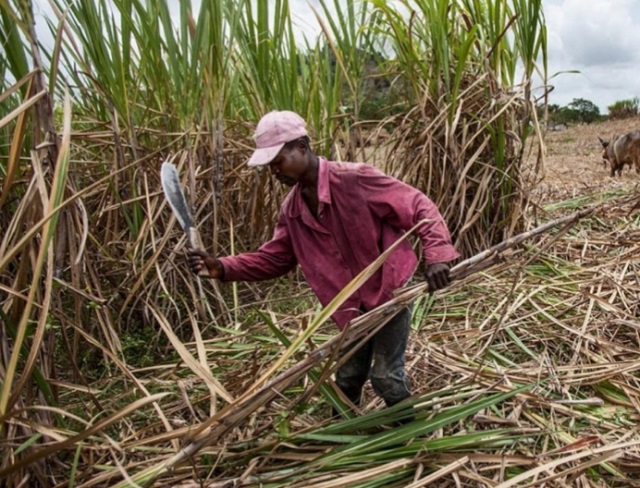
Kampala, Uganda | THE INDEPENDENT | In a decisive move to stabilize a key agricultural industry, the Ugandan government has brokered a binding agreement setting a minimum price of Shs125,000 per ton of sugarcane for the Busoga region. The intervention, finalized in a high-stakes Kampala meeting on Dec. 19, directly addresses market failures that saw farmer payments plummet to Shs90,000 per ton, threatening the economic foundation of the nation’s sugar production.
Chaired by Trade Minister Francis Mwebesa, the meeting convened officials from the Ministry of Trade, Industry and Cooperatives, the Sugar Industry Stakeholders Council, and leadership from six major millers: SCOUL, Kakira Sugar, GM Sugar, Kamuli Sugar, Mayuge Sugar, and Bugiri Sugar. The core agenda was a pressing business risk: the collapse of farmer incomes jeopardizing long-term supply chain stability and sector investment. Minister Mwebesa framed the issue not merely as a farmer concern but as a critical threat to “mill supply stability” and overall “sector resilience,” highlighting how arbitrary pricing undermines the entire industry’s operational predictability.
The government’s action enforces the pricing mechanism embedded in the Sugar Amendment Act 2025, which had been ignored by several millers, including GM Sugar and Kamuli Sugar. While miller representative Henry Kata cited variable production costs as a justification for price fluctuations, the state countered with a firm mandate for uniform compliance. The agreement compels all participating millers to adhere to the Shs125,000 floor for a provisional two-month period, providing immediate income certainty for out-growers and buying time for a comprehensive national pricing review.
Beyond immediate farmer relief, the deal mitigates significant political and social risk flagged by officials. Minister Mwebesa explicitly linked sustained low prices during an election period to potential erosion of support for the ruling National Resistance Movement, while Minister Frederick Ngobi Gume directly cited the need for “social and political stability.” This underscores how commercial instability in a dominant regional industry translates directly into systemic business environment risk.
For investors and millers, the agreement imposes short-term cost controls but promises greater long-term predictability. By legally anchoring farmer returns relative to input and transport costs, the government aims to secure the raw material supply essential for mill operation and export capacity. The unanimous compliance from millers, as represented by figures like Akash of GM Sugar and Rajbir Singh Rai of the Stakeholders Council, suggests a pragmatic industry acceptance of regulated pricing as a necessary cost for securing its own supply chain and maintaining government partnership. The outcome reframes the state’s role from passive regulator to active stakeholder in de-risking a vital agricultural commodity market.