The Independent Uganda: You get the Truth we Pay the Price


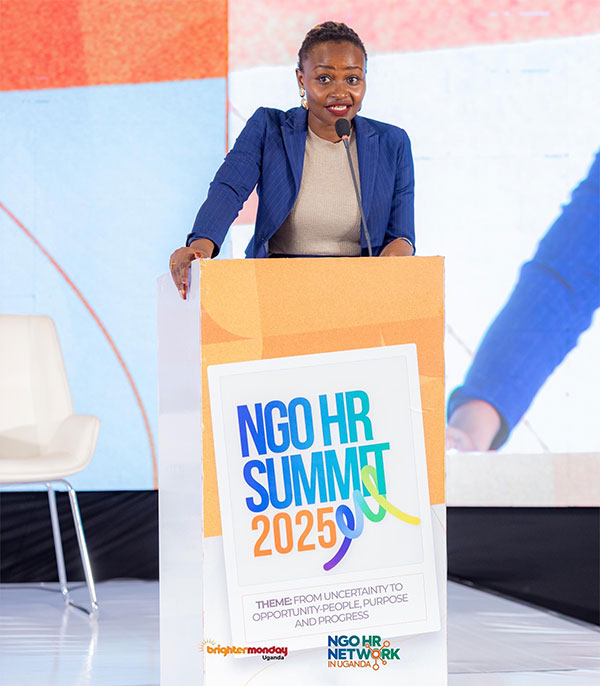
Kampala, Uganda | THE INDEPENDENT | Uganda’s non-profit sector is being urged to redefine its human resource practices as the backbone of organizational resilience amid shifting regulations, evolving funding landscapes, and mounting demands for sustainable impact. This call to action came during the NGO HR Summit, held in Kampala under the theme “From Uncertainty to Opportunity: People, Purpose, and Progress.”
The summit, hosted by BrighterMonday Uganda in collaboration with the Mastercard Foundation, brought together HR professionals, NGO leaders, and policymakers to explore how human resource management can move beyond traditional administration to become a strategic driver of institutional sustainability and decent work.
Speaking at the event, Xenia Wachira Country Director of BrighterMonday Uganda, reflected on the summit’s journey from concept to reality, noting the growing importance of HR in the NGO space.
“It’s an honour to finally make a concept a reality. There is so much going on in the NGO sector and we don’t get to hear much about it,” she said.
“We are happy to support the NGO world and to see how we can work together to build organizations that not only create impact but also nurture their people.”
Wachira shared BrighterMonday’s evolution since its founding in 2014, explaining that the company has expanded beyond being a job platform to providing end-to-end people solutions from executive recruitment to training and employer branding.
“We are your business partners. We solve problems starting from talent acquisition to aligning job structures with strategy. The world of work has changed, and we’ve pivoted with it.”
She also highlighted BrighterMonday’s Gen Kazi Initiative, which aims to bridge Uganda’s persistent gap between job supply and demand, especially among youth.
Speaking at the same event, Pamela Kabahesi, Country Programs Lead at BrighterMonday Uganda, emphasized the need for meaningful, dignified employment and the role of collaboration in achieving it.
“Employment is not just about wages,” she said.
“It’s about creating work that is dignified and fulfilling. Uganda has one of the youngest populations in Africa we must nurture this talent, guide them through their careers, and help shape the kind of leaders they will become.”
Kabahesi called for stronger partnerships between NGOs and the private sector to ensure that youth entering the workforce are not only employable but also supported to grow.
“On one hand, job seekers need to be ready for opportunities, but on the other, employers must also nurture and mentor young people,” she added.
“If both sides speak the same language, it will be easier for graduates to find meaningful employment.”
Delivering the keynote address, Zakari Kansiime, Commissioner at the Ministry of Gender, Labour and Social Development, applauded BrighterMonday Uganda, the NGO HR Network, and Mastercard Foundation for their collaboration.
He emphasized HR’s pivotal role in ensuring decent work, compliance, and ethical governance across Uganda’s NGO landscape.
“Your theme; From Uncertainty to Opportunity, People, Purpose, Progress truly captures the spirit of our times,” Kansiime said.
“Partnerships such as the one between BrighterMonday Uganda and the NGO HR Network are crucial for harnessing Uganda’s young population and turning potential into productivity.”
Kansiime reaffirmed the government’s commitment to working with NGOs to strengthen compliance, protect workers’ rights, and promote decent work.
He outlined several areas of collaboration, including labor audits, policy alignment, HR capacity building, and psychosocial well-being for NGO staff especially those in humanitarian roles.
“Compliance may stop the work temporarily, but fairness must never stop,” he cautioned.
“When we take care of our people, we strengthen our institutions. HR must become a strategic guardian of sustainability, not just an administrative support.”
He also encouraged NGOs to seek early consultation with labor offices to manage employment challenges lawfully and fairly, highlighting that compliance is cheaper than correction.
Throughout the summit, discussions centered on how NGOs can remain agile amid uncertainty by prioritizing people-centered strategies, embracing technology, and fostering inclusive workplaces.
As Uganda’s NGO sector continues to employ tens of thousands and drive social impact across health, education, and governance, the summit concluded with a shared message: progress begins with people.
“Together we can build organizations that are compliant, compassionate, and resilient and a labor environment that promotes dignity, fairness, and decent work for all”, Kansiime concluded.