The Independent Uganda: You get the Truth we Pay the Price


For a country that has never seen peaceful transfer of power, the future is arriving faster than its readiness for it
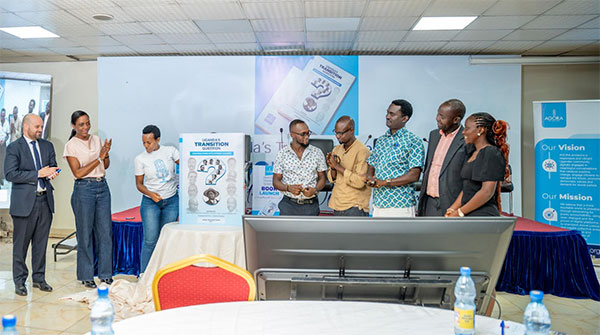
COVER STORY | RONALD MUSOKE | On the afternoon of December 10, at Hotel Africana in Kampala, Uganda’s political future was discussed quietly, almost cautiously. There were no cameras jostling for position, no slogans shouted into microphones, no security operatives hovering at the edges of the room.
The meeting was modest; perhaps by design or circumstance but what stood out most was not who was present, but who was not. No official from the ruling National Resistance Movement (NRM) attended. Whether they were not invited or simply chose to stay away was never made explicit. But in a country where power is omnipresent, absence itself can be a statement.
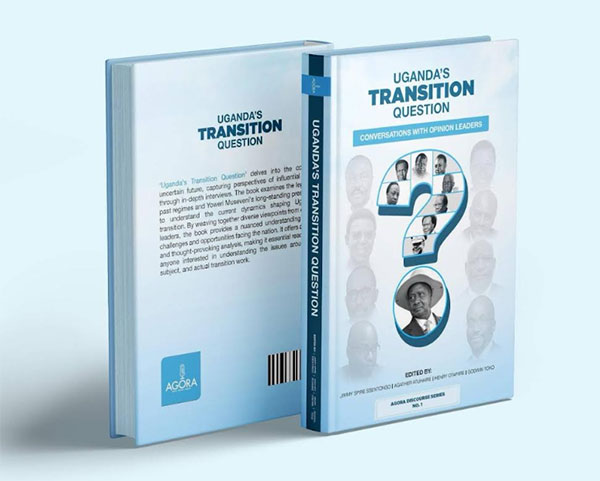
Inside the room sat constitutional lawyers, policy analysts, former diplomats, academics, civil society activists, veteran journalists, and young Ugandans who have grown up knowing only one president. They had gathered for the launch of a book with an unusually direct title: “Uganda’s Transition Question,” published by the Agora Centre for Research.
Outside, Kampala was its usual self; noisy, impatient, half-political by reflex. Inside, the mood was different. This was not a rally, not an opposition meeting, not a strategy session. It was something far more unsettling: an honest conversation about what happens when 81-year-old Yoweri Kaguta Museveni who has ruled Uganda for four decades either leaves power—or does not.
Uganda is heading into presidential elections scheduled for January 15, 2026. The incumbent, President Yoweri Kaguta Museveni, now vying for an unprecedented seventh straight five-year term, is once again the central figure. For many Ugandans, the election is less about choice and more about survival; of institutions, of peace, of the state itself.
Weird date of book launch
As Dr Spire Ssentongo, one of the editors of the book, reminded the audience, the date of the launch carried a cruel historical symmetry. “This day coincides with something that happened 45 years ago in this country,” he said. “On this day, we had an election.”
“One of the candidates then is a candidate now, and he’s protecting the gains,” Dr. Ssentongo said, referring to President Museveni’s campaign slogan. “But it makes sense. Since he got 0.7% (of the votes cast) that time, he still has to keep building the numbers.”
There was brief laughter in the conference room before Dr. Ssentongo quickly added: “It was very important that we mentioned that coincidence, because it speaks a lot to the theme of today, the theme of transition, the theme of the journey of this country and the anxieties and whatever surrounds that topic, where we are going.”
The room went quiet, perhaps because beneath the humour lay a truth that no one in the room could avoid: Uganda has never experienced a peaceful transfer of presidential power since independence in 1962. Every transition has been violent, traumatic, or extra-constitutional. And as the country edges closer to 15 January, 2026, the question is no longer whether a transition will come, but how—and at what cost.
How a book became a mirror
“Uganda’s Transition Question” did not begin as a publishing project. It began, as Dr Ssentongo explained, as a series of conversations on X (formerly Twitter). “The idea was to invite someone to talk about transition,” he said. “But then one of us suggested that it shouldn’t end there.”
Uganda, he noted, is overwhelmed by noise; scandals stacked upon scandals, each one quickly displaced by the next. “Today someone has stolen Mabaati (iron sheets). Tomorrow it’s something else. There is a constant supply of scandals. Sometimes it looks deliberate, as if the aim is to keep us discussing everything so that we focus on nothing,” Dr. Ssentongo said.
The book was an attempt to slow the conversation down, to fix ideas in place before they dissolved into the digital ether. Eight contributors from across the political spectrum—government insiders and critics, soldiers and civilians, optimists and sceptics—were brought together in what the editors insist is only a first edition. “This is not meant to be an opposition conversation,” Dr Ssentongo said. “This is a topic that concerns everyone.”
He was frank about disagreement. “When I read these contributions, I only agree with about 50 percent or less,” he admitted. “But all these voices matter. Sometimes conversations fail because we refuse to listen to people we disagree with.” That refusal to listen, to imagine alternatives, to prepare for change hovered over the entire afternoon.
A country that shoots its way forward
In the foreword to the book, former Makerere University law don, Prof Joe Oloka Onyango, situates Uganda’s transition anxiety in history that is both familiar and unresolved.
“Since independence in 1962,” he writes, “Ugandans have had a myriad experiences with political transition. Unfortunately, most of those transitions have been extra-constitutional, traumatic, and excessively violent.”
“Moving further along, it is quite clear that few actors on the contemporary Uganda political scene have raised more concern about the issue of transition than the National Resistance Movement (NRM) and its octogenarian leader, Yoweri Kaguta Tibuhaburwa Museveni,” he writes.
“Closing in on 40 years in power, it is the height of irony that when President Museveni came to power in 1986, he proclaimed the NRM to be a transitional arrangement of governance, and that he needed only four years within which to arrange for a peaceful and democratic transfer of power.”
Godber Tumushabe, a lawyer, academic, activist and one of the most forceful voices on the panel, put it more bluntly. “Every transition of power in this country has been violent,” he said. “Every president has shot himself to power. Even someone who is succeeding himself still has to shoot himself to power.”
Uganda, Tumushabe argued, has normalized violence as a pathway to authority. Elections exist, but they function less as mechanisms of choice and more as rituals of enforcement. “Since 2001, Museveni has had to arrest people, kidnap people, and by 2021, kill people to stay in power,” he said. “That is a very important issue for us as a country.”
The implication was uncomfortable but unavoidable: Uganda is preparing for another transition without having resolved the conditions that made previous ones catastrophic.
The transitional leader who never transitioned
One of the great ironies of Uganda’s political story is that Yoweri Museveni came to power promising transition. When the National Resistance Army captured Kampala at the beginning of 1986, Museveni declared the NRM a temporary arrangement. He said he needed only four years to stabilize the country and oversee a democratic handover.
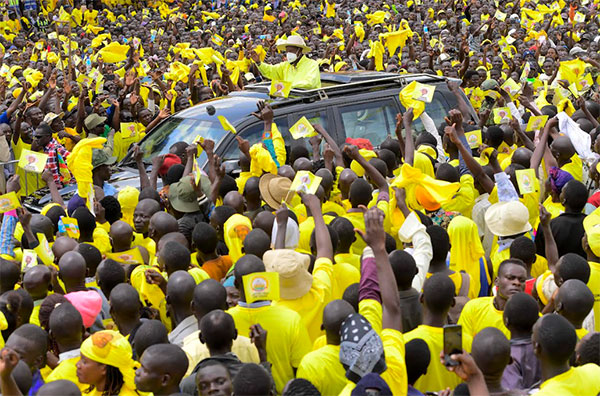
More than four decades later, Prof Oloka Onyango describes what emerged instead as “a dynastic republic at best, or a republican monarch at worst.”
“The NRM has morphed from an interim measure ostensibly designed to restore peace and economic security to a highly conflict-riddled and distraught community, into what can only be described as a dynastic republic at best, or a republican monarch at worst,” he says in the foreword.
On the panel, Tumushabe offered a psychological reading of this evolution. “One of our biggest challenges,” he said, “is that Museveni transformed his ambition into a national vision.”
What many Ugandans believed was a collective mission; liberation, reconstruction, democracy; gradually became indistinguishable from one man’s determination to remain in power.
“When Museveni came to power in 1986, I was in Senior Four,” Tumushabe recalled. “Many of us mobilised around him. We were his biggest cheerleaders, only to realise later that we were actually following someone’s ambition.”
As one generation fell away in disillusionment, another was recruited. “When people like us fall off,” Tumushabe said, “he picks another generation. And that’s how he survives.”
Succession is not transition
A central tension running through the book—and the discussion—is the difference between succession and transition. “Museveni is busy dealing with succession,” Tumushabe argued. “Ugandans are talking about transition.”
Succession implies continuity of power structures, possibly even bloodline continuity. Transition implies change—political, institutional, generational.
“For us Ugandans, we want a stable, prosperous and equitable country,” Tumushabe said. “We are looking at transition. Museveni is looking at succession.” The collision between these two agendas, he warned, is inevitable.
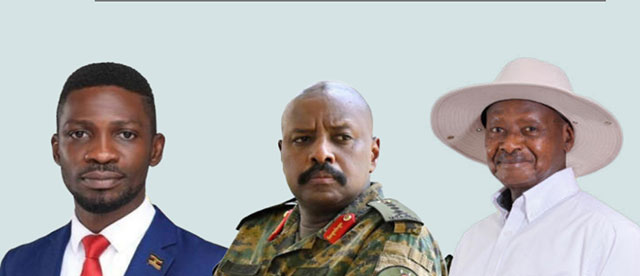
That collision is already visible in public discourse, fuelled by persistent speculation around the political ambitions of Museveni’s son, Gen Muhoozi Kainerugaba.
Veteran journalist Onyango Obbo’s contribution to the book focuses on a quieter but deeper crisis: trust. “Museveni built his system on trust of different groups,” Onyango Obbo observes. “Ethnic groups, religious groups, regions.” But that trust, many speakers argued, has been systematically broken.
“The narratives of betrayal are not simple,” one panelist noted, referencing books written by Museveni’s former comrades, including the late Major John Kazoora’s “Betrayed by My Leader.”
For Onyango Obbo, the danger is not just that Museveni can no longer be trusted—but that Ugandans may never again trust any president.
“That could lead to the disintegration of Uganda as we know it,” he warns. Tumushabe offered a counter-argument. “That fear might be our opportunity,” he said. “Because trust once existed. It can exist again—but not around individuals.”
A constitution without constitutionalism
Few moments during the discussion were as sobering as the reflections of Dan Wandera Ogalo, a veteran constitutional lawyer and one of the framers of the 1995 Constitution.
“We were naïve,” he admitted. “We were too trusting.” The Constitution, Ogalo explained, was designed to restrain power through checks and balances; between the executive, legislature, judiciary and independent institutions. Those checks have since collapsed.
“Parliament was supposed to check the executive. The judiciary was supposed to protect rights,” he said. “But over the years, all these institutions have been subjected to the executive.”
One of his deepest regrets was the failure to entrench term limits beyond easy amendment. “Had we required approval from district councils and a referendum, I don’t think Museveni would have had the courage,” he said.
Yet Ogalo was also realistic. “Any constitution is a piece of paper unless its provisions are rooted in the balance of power among social forces.” The people, he insisted, must be willing to defend it. If one institution dominated the conversation, it was the military. “The biggest player in Uganda today is the army,” Ogalo said.
Tumushabe described power in Uganda as residing in what he called “the unholy trinity—the father, the son, and the unholy spirit.” Soldiers are everywhere; in local government, in fisheries enforcement, in poverty alleviation programmes, in Parliament, even in civil service roles.
Article 208 of the Constitution declares the army non-partisan but reality has rendered that provision almost symbolic. “When the army chief is leading a political organisation and the commander-in-chief is happy,” Ogalo asked, “what can you write in the Constitution to stop that?” His answer was bleak. “You cannot have democracy without democrats.”
The Muhoozi question
Yvonne Mpambara, a youthful social justice lawyer and activist who attempted to run for president in the 2026 cycle, spoke from lived experience. “There has been an intentional creation of uncertainty around the transition question,” she said. “Rumours take root because people feel disregarded.”
For her, elections have become hollow rituals. “We already know who is going to win,” she said. “But people still insist on trying to break the system.”
She rejected claims that Ugandans, especially young people, are politically apathetic. “We are the ones being beaten,” she said. “The biggest demographic facing violence is the youth.”
On the Muhoozi question, she was unequivocal. “I don’t think Ugandans should ever, ever pacify a Muhoozi presidency. And I feel we need to be very vigilant not to accept whatever level of pacification they’re trying to do,” she said.
“Pushing it onto us, for us to discuss it more, to normalize that narrative that he could possibly become a president, we need to push it out. Uganda needs systems that work. We need to know that there’s an electoral commission that works. We need to know that there’s an executive that works for the people. We need to know that the legislature works for the people.”
“We need systems that work. So, the Muhoozi question is out. It’s completely out. We are not going to try to pacify it. Uganda should cut it out of the deal. We should not give it a soft landing.”
Dialogue, resistance, or paralysis?
Meanwhile, sharp disagreements emerged over strategy. Hassan Male Mabirizi, a lawyer who champions rule of law dismissed even the language of transition. “Article 3 of the Constitution calls on citizens to resist,” he said. “We dialogue on human rights violations? I don’t think so,” he said.
Eron Kizza, another lawyer went further, describing Uganda as a military dictatorship drifting toward monarchy. “The Constitution cannot defend itself,” he said. “Ugandans must be ready to sacrifice (for it).”
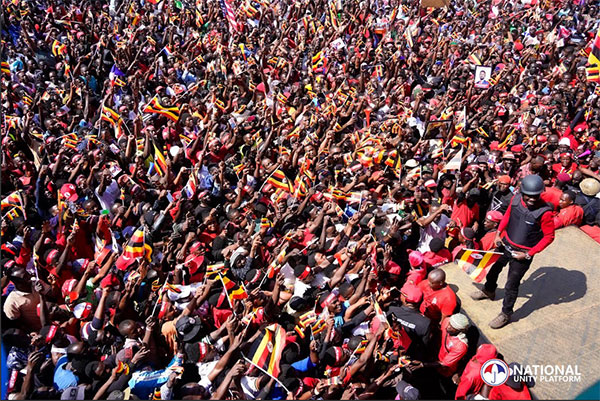
Former diplomat Ambassador, Edith Ssempala who is now in the Alliance for National Transformation (ANT) political party fold asked the most unsettling question of all: What if Museveni leaves, but nothing changes? “I believed in Museveni absolutely at the beginning,” she said. “Now I know better.”
Age, gender, opposition credentials—none, she argued, are guarantees. “How do we immunise ourselves from the dictators of tomorrow?” she asked. With institutions weakened and oil revenues looming, the temptation of power will not disappear with one man.
But are Ugandans ready for transition?
Maria from the Northwestern region of West Nile posed a final provocation. She said: “I don’t think Ugandans are ready for a transition because we are still willing to participate in illegitimate processes and carry our legitimacy as citizens and put them in illegitimate processes intentionally. You wake up every day, put up a poster on a campaign that you know, an election that you know where it’s going to end.”
“We have reduced our agency to thinking that if we remove ourselves, then these people can’t do anything. They need to see numbers on the polling station to take a picture in order to say 68% voted.”
“But if the polling stations are empty, there are no pictures to share. They are going to have to find AI images of yourselves because then you will take pictures of empty polling stations and say no, we did not vote. But when people show up, then they will say 68% of you voted. And so, we need to learn to do civil disobedience, for example, boycotts.”
She added: “Until we remove ourselves from illegitimate processes, we are not completely ready for a conversation on transition. And it’s even more painful that people who have influence and power are driving us into illegitimate processes as opposed to removing us from illegitimate processes.”
The question that refuses to go away
Interestingly, as the meeting ended, nothing was resolved. No roadmap agreed upon. No consensus reached. But perhaps that was the point. Uganda’s transition question is not about answers. It is about whether the country is willing to confront its fears honestly; without slogans, without shortcuts, without pretending that time will solve what courage has not. At Hotel Africana that December afternoon, in a room absent of power but heavy with truth, Ugandans asked themselves the most haunting question of all: What happens after Museveni?