The Independent Uganda: You get the Truth we Pay the Price


Kampala, Uganda | Julius Businge | Ugandan business leaders and researchers have raised alarm over the country’s low family business survival rate, revealing that fewer than 10 percent of family-owned enterprises make it beyond the founding generation.
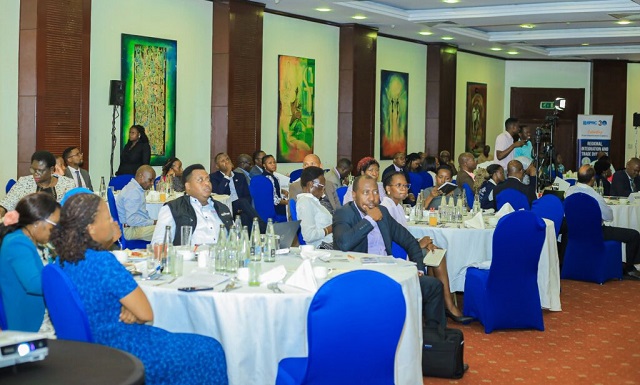
The concerns were shared during a high-level stakeholders’ meeting hosted by the Economic Policy Research Centre (EPRC) in Kampala this week, where participants urged founders to invest early in governance structures, professional management and deliberate integration of family members to ensure continuity.
EPRC Executive Director Sarah Ssewanyana, in remarks delivered by Director of Research Dr. Ibrahim Kasirye, said the fragility of family-owned enterprises has far-reaching implications.
She noted that without clear succession plans, governance systems or financial discipline, many collapse under pressure—whether from market shifts or the sudden death of a founder. She warned that the weakness of family businesses is not only a commercial setback but a wider development concern.
Presenting findings from a new study, EPRC Research Fellow Linda Nakato said Uganda’s ratio of first-generation to multi-generational family businesses stands at 4:1, leaving only a small fraction able to transition successfully. The data underscores how most enterprises remain young and vulnerable, with only about 10 percent surviving long enough for the next generation to take charge.
The meeting attracted a strong representation of founders, business owners and academics, including Aga Ssekalala Jr of UgaChick, Simba Group’s Patrick Bitature, Barbara Ofwono Buyondo of Victorious Education Services and Kampala Quality Schools founder Jennipher Kasisiri.
Kasisiri shared her experience of gradually integrating her children into the business, noting that the process begins early and continues steadily until they are ready to assume operational roles.
Rugyeyo Coffee Farm proprietor Robert Kabushenga stressed the importance of separating family dynamics from business decisions. He said governance begins at the family level, not in the boardroom, and encouraged families to establish a “family office” to prevent domestic disagreements from affecting business operations.
He added that children should be free to choose whether or not to join the enterprise, and that spouses should not automatically be assumed business partners.
Rajesh Kumar, Chairman of the Indian Business Association, highlighted frugality as a cornerstone of long-lasting family businesses. Warning against lavish lifestyles, he cited the downfall of Kingfisher India as an example of how excess can derail even the strongest enterprises. He advised founders to reinvest earnings rather than diverting them into luxury spending.
Numa Foods’ Sales and Marketing Lead Isaac Asiimwe spoke about the importance of spousal cooperation. He recalled a fire that destroyed the company’s factory and said that recovery was only possible because savings from his mother’s secretarial bureau were reinvested into rebuilding the business. He noted that without alignment and sacrifice at home, such resilience would have been impossible.
Presidential CEO Forum Chairperson Irene Birungi Mugisha commended EPRC for sparking what she described as a vital national dialogue. She said strengthening family business succession is essential for safeguarding the future of Uganda’s entrepreneurial ecosystem and ensuring generational wealth creation.