The Independent Uganda: You get the Truth we Pay the Price


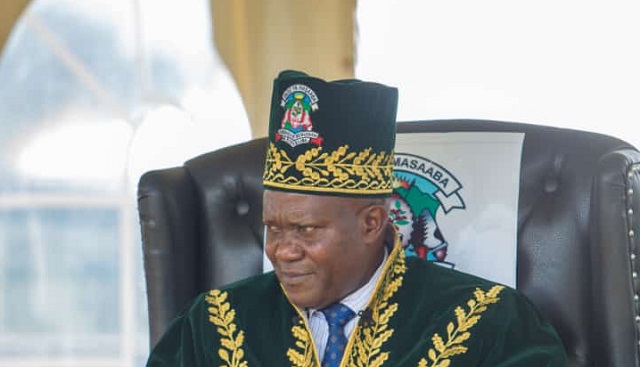
COMMENT | Sir Jude Mike Mudoma | It is important to build a strong relationship between our communities and the law. As cultural leaders in this country, we have a critical role to play in promoting respect for the law and encouraging our communities to do the same. Our cultural values teach us the importance of community, respect, and fairness – values that are essential for a just and peaceful society. Let us work together to ensure that our laws reflect these values and promote the common good.
Your presence today is a verification of the importance of promoting cultural heritage and community-based justice. We hope that the discussions and insights to be shared during this public lecture will contribute to a deeper understanding of the role of cultural institutions in promoting peace, justice, and development in our communities. Let us continue to work together to build a society that values and respects our cultural heritage and recognizes the importance of community-based justice systems in promoting peaceful conflict resolution.
However, we recognize that there are challenges in our justice system. Courts are overwhelmed with cases, and many of our citizens are not aware of their rights and responsibilities. This is partly because our cultural institutions and formal justice systems have not been working together effectively. As cultural leaders, we must take the lead in promoting justice, accountability, and transparency. We must work with our communities to address issues such as corruption, human rights abuses, and discrimination. We must also support alternative dispute resolution mechanisms, such as mediation and arbitration, which can help resolve conflicts and reduce the burden on formal courts.
To achieve this, we urge the government to provide effective facilitation and support to cultural institutions, enabling them to resolve disputes at the clan level. By doing so, we can reduce the burden on formal courts, promote community cohesion, and foster a culture of peaceful conflict resolution.
Recently, the Ministry of Gender, Labour and Social Development issued a corrigendum in the Uganda Gazette aimed at aligning cultural institutions within the legal framework. We welcome this initiative and urge the government to clarify the purpose and implications of the corrigendum to the public. We also call on the government to increase awareness and education about laws and rights, engage communities in law-making processes, and incorporate cultural perspectives in policy development.
The current judicial systems in many countries, including Uganda, have indeed evolved from traditional judicial systems. Recognizing and supporting the cultural judiciary system and services can help to:
- Strengthen community-based justice: By acknowledging and supporting cultural dispute resolution mechanisms, the formal justice system can help to strengthen community-based justice and promote peaceful conflict resolution.
- Increase access to justice: Cultural judiciary systems often provide more accessible and affordable justice services, especially for marginalized or rural communities.
- Promote cultural relevance: Recognizing cultural judiciary systems can help to ensure that justice services are culturally relevant and responsive to community needs.
- Enhance legitimacy: By acknowledging and supporting cultural judiciary systems, the formal justice system can enhance its legitimacy and build trust with local communities.
To achieve this, it’s essential to establish a clear legal framework that recognizes and supports cultural judiciary systems. This could involve:
- Legislative reforms: Amending existing laws or enacting new legislation to recognize and support cultural judiciary systems.
- Policy development: Developing policies that promote and support cultural dispute resolution mechanisms.
- Capacity building: Providing training and capacity-building support to cultural leaders and institutions to enhance their ability to deliver justice services.
- Collaboration and coordination: Fostering collaboration and coordination between formal justice systems and cultural institutions to ensure effective referral mechanisms and support services.
By taking these steps, Uganda can create a more inclusive and effective justice system that recognizes the value of cultural judiciary systems and services.
We do appreciate and understand why the formal justice system may be hesitant to fully embrace cultural dispute resolution mechanisms due to several reasons:
- Lack of standardization: Cultural dispute resolution mechanisms can vary greatly across different communities and cultures, making it challenging for the formal justice system to recognize and integrate them into the existing framework.
- Concerns about fairness and human rights: Formal justice systems are bound by laws and regulations that prioritize human rights and fairness. There may be concerns that cultural dispute resolution mechanisms may not always adhere to these standards.
- Power dynamics and representation: Cultural dispute resolution mechanisms may be dominated by traditional leaders or elders, which can lead to concerns about unequal representation and power imbalances.
- Lack of formal recognition and regulation: Cultural dispute resolution mechanisms have not been formally recognized or regulated by the state in the past, which has created uncertainty and undermined our legitimacy. I am happy to report that government has taken a stand to start ADR mechanism in this country. Recently cultural leaders underwent vigorous training in Kampala on the same.
- Fear of losing authority: The formal justice system was previously concerned that recognizing cultural dispute resolution mechanisms could undermine its authority and jurisdiction over disputes.
- Limited capacity and resources: Formal justice systems may lack the capacity and resources to effectively integrate cultural dispute resolution mechanisms into their existing systems.
- Perceptions of cultural dispute resolution as “informal”: Formal justice systems may view cultural dispute resolution mechanisms as “informal” or “alternative” rather than as legitimate and effective mechanisms for resolving disputes.
However, many of these concerns can be addressed through dialogue, education, and collaboration between formal justice systems and cultural institutions. By working together, it’s possible to create a more inclusive and effective justice system that recognizes the value of cultural dispute resolution mechanisms.
By working together, we can build a society that is just, peaceful, and prosperous for all. I urge all citizens to take an active role in shaping our laws and holding our leaders accountable for their actions. Let us support our cultural institutions and formal justice systems and work together to promote a culture of compliance, trust, and cooperation.
Together, we can achieve great things. Let us build a Uganda that we can all be proud of – a Uganda that is just, equitable, and fair.
Thank you once again, and may our collective efforts lead to a brighter future for all.
*****
Sir Jude Mike Mudoma- UMUKUUKA wa BUGISU | Presented by HRH, Sir Jude Mike Mudoma-Umukuuka (King) of Bugisu on the Occasion of Public Culture Lecture: Theme: “Relationship between the Citizens and the Law” Day 29th November, 2025 at Courts View Hotel- Mbale City