The Independent Uganda: You get the Truth we Pay the Price


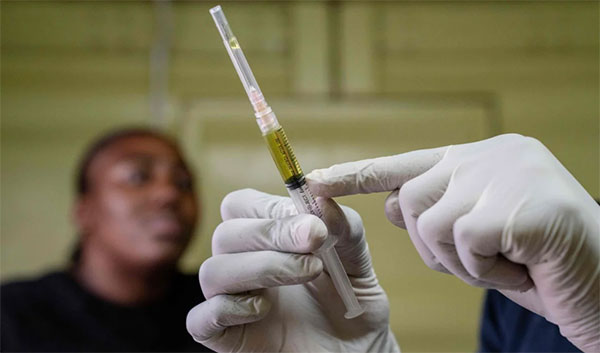
Signatories must guarantee that genetic sequence data and samples from potential outbreaks are shared with the US within 5 days of detection
SPECIAL FEATURE | JEVANS NYABIAGE | Washington is securing bilateral health deals with countries across Africa to ensure direct access to critical pathogen data and specimens following the United States’ withdrawal from the World Health Organization (WHO).
Analysts say the US’ strategic retreat from multilateral organisations has created a vacuum that China is likely to exploit to deepen its influence within global health bodies and position itself as the main partner for the developing world.
Under the “America First Global Health Strategy”, more than a dozen African countries – including Kenya, Uganda, Nigeria, Ethiopia and Rwanda – have signed bilateral agreements to receive health financing from the US in exchange for direct, long-term access to their biological data and pathogen specimens.
The deals could replace the dismantled US Agency for International Development (USAID) grant system that provided the essential health response to HIV/Aids, malaria and tuberculosis.
By replacing traditional aid with this strategy, the US is leveraging essential funding to ensure nations prioritise US national security and the competitive interests of American pharmaceutical companies.
Observers warn that while Washington uses these deals to counter Chinese influence, African nations risk becoming transactional pawns unless they conduct rigorous reviews before signing away access to their most sensitive data.
“While the US is strategic about what it wants, many of the countries are not; they must examine these terms thoroughly before signing,” Odubanjo said.
He said Washington’s plan relied on the global reach of technology, while noting that artificial intelligence affected all sectors.
“The underlying ingredient to make artificial intelligence, which will impact research and development of vaccines, treatments, and even biological weapons/antidotes, is data. That is why any country will want access to it,” he said.
US$1.6 billion in direct government-to-government funding
Kenya was the first to sign the US health deal on December 4 during President William Ruto’s visit to Washington. Under the terms of the agreement, the US has committed US$1.6 billion in direct government-to-government funding over the next five years for HIV/Aids, tuberculosis, malaria, maternal and child health and polio eradication, according to a statement by the US State Department.
However, the deal faces domestic pushback and legal action because of data privacy concerns and a lack of parliamentary oversight regarding a clause giving 25 years of access. On December 11, the High Court in Nairobi issued orders to temporarily block the agreement until a full hearing is held early next year.
Nigeria will receive nearly US$2.1 billion in health assistance over five years as part of a framework requiring US$3 billion in domestic co-investment. The deal earmarks US$200 million for more than 900 Christian faith-based clinics and hospitals, a focus US officials linked to reforms protecting Christians from extremist violence. It follows the Trump administration’s threats to cut aid to address what it termed the “mass slaughter” of Christians in Nigeria.
Lawrence Gostin, a professor and founding director of the O’Neill Institute at Georgetown University, said Washington preferred a bilateral approach that it could tightly control. He compared it to the administration’s use of bilateral trade deals and tariffs.
Gostin said the US sought health data access to bolster national security and provide a competitive advantage to American pharmaceutical companies against novel health threats.
“Having access to data gives the US power and leverage,” Gostin said.
He said it was a response to negotiations taking place in Geneva under the WHO Pandemic Agreement for a Pathogen Access and Benefit Sharing (PABS) system. “The US is undermining that multilateral treaty process by cutting its own deals.”
The US has also signed deals with Cameroon, Botswana, eSwatini, Lesotho, Mozambique, Liberia and Sierra Leone. Under these agreements, signatory nations must guarantee that genetic sequence data and physical samples from any potential outbreaks are shared with American authorities within five days of detection.
The US deals with African nations precede WHO talks next month aimed at establishing a global PABS system. By securing bilateral 25-year commitments, Washington ensures a competitive advantage in pharmaceutical research and biosecurity, regardless of any multilateral consensus reached in Geneva. It is a pre-emptive strategy that follows the formal US withdrawal from the WHO on the first day of the present administration.
Meanwhile, China has prioritised physical infrastructure through its “health silk road”, building hospitals and the Africa Centres for Disease Control and Prevention headquarters in Addis Ababa. Beijing deploys thousands of medical workers across the continent annually.
On whether Beijing was likely to respond to Washington’s health deals with Africa, Odubanjo said: “China has always tried to position itself as a less imposing partner. That might be the case here too.”
‘America first’
Furthermore, Gostin said, the “America first” strategy paradoxically echoed the transactional nature of China’s Belt and Road Initiative towards foreign assistance.
“China may respond by doubling down on the belt and road, and also curry favour with the WHO by claiming that it is for world health while the United States is not,” Gostin said.
Seifudein Adem, a global affairs specialist and visiting professor at Doshisha University in Kyoto, Japan, suggested that the Trump administration’s recent health-related deals with a handful of African countries were best understood as a manifestation of its broader bilateral and transactional approach to diplomacy.
He said the suspension of the US President’s Emergency Plan for Aids Relief – which abruptly disrupted life-saving services across Africa – was equally significant.
“This decision strongly suggests that the well-being of African populations does not constitute even one of the central priorities in the administration’s Africa policy,” Adem said.
According to Adem, the signing of these health agreements and their potential outcomes were hardly surprising. He said that by extension, the turn towards bilateral health agreements with African countries was likely – by default if not by design – “to undermine the multilateral frameworks that had emerged in the wake of Covid-19 to address global health governance collectively”.
“The shift creates an opening for China to progressively assume a leadership role in global health, potentially framing this development as a peaceful transition of influence in this issue area.”
*****
Source: South China Morning Post.