The Independent Uganda: You get the Truth we Pay the Price


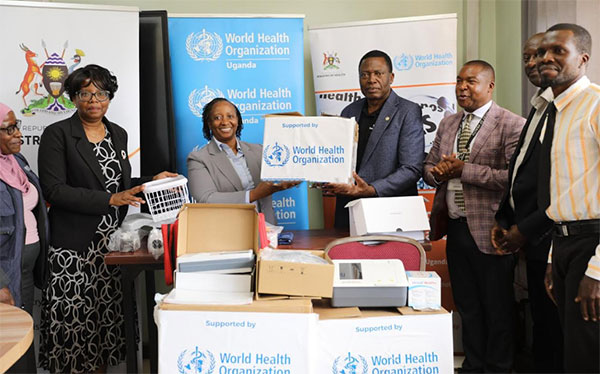
The D-CARD Africa Project is designed to integrate non-communicable disease screening into existing health services, including HIV, tuberculosis, and malnutrition programmes
Kampala, Uganda | THE INDEPENDENT | In a modest health centre in Sembabule, a rural district in central Uganda, the stark limitations of local healthcare are still vivid in the memory of nursing staff. “We could suspect hypertension or diabetes, but without the right equipment, we couldn’t confirm or act early,” a nurse recounted. For years, the absence of diagnostic tools forced clinicians to turn away patients or provide care that was necessarily speculative.
Last week, that situation began to change, as the World Health Organization (WHO) formally handed over a suite of medical equipment to Uganda’s Ministry of Health, under the umbrella of the Diabetes and Cardiovascular (D-CARD) Africa Project.
The initiative represents a significant step in Uganda’s ongoing effort to confront the rising burden of non-communicable diseases (NCDs), including diabetes and hypertension, which are responsible for an increasing proportion of morbidity and mortality in sub-Saharan Africa.
The newly provided equipment includes blood pressure monitors, glucometers with accessories, HbA1c analyzers and reagents, electrocardiogram (ECG) machines, pulse oximeters, and other essential diagnostic tools. These instruments will be deployed across 40 primary healthcare facilities in the districts of Kabale, Koboko, Lira, and Sembabule.
At the handover ceremony, Dr Olaro Charles, Uganda’s Director General of Health Services, highlighted the broader public health rationale for the project. “Access to these tools should be part of our standard health system operations to strengthen prevention and early detection across all areas,” Dr Charles said. He stressed that the intervention must be accompanied by patient education and community messaging to reinforce preventive care as a routine part of primary health services.
The D-CARD Africa Project is designed to integrate non-communicable disease screening into existing health services, including HIV, tuberculosis, and malnutrition programmes, reflecting a global shift towards more holistic and sustainable approaches to healthcare delivery. By embedding NCD diagnostics into routine health services, the project aims to facilitate early detection, timely treatment, and better long-term health outcomes for patients, particularly in underserved rural areas.
Dr Kasonde Mwinga, WHO Representative to Uganda, underscored the significance of the handover as both a practical and symbolic milestone. “This moment is a testament to our shared commitment to advancing non-communicable disease care and ensuring that life-saving diagnostics and treatment reach the communities that need them most,” Dr Mwinga said. He also highlighted the importance of strengthening data collection systems, training healthcare workers, and fostering community engagement in prevention and self-care.
The WHO representative expressed gratitude to the World Diabetes Foundation, whose financial support underpins the initiative. “Their investment is helping build a stronger, more equitable health system—one that prioritises access and quality for all,” he said.
Analysts’ views
Health analysts note that projects such as D-CARD Africa have wider implications for Uganda’s health system. By equipping frontline facilities with essential diagnostic tools, the initiative not only enhances clinical capacity but also aligns with the government’s broader commitment to universal health coverage. Early detection and intervention for NCDs can reduce long-term treatment costs and prevent complications, which are often financially and socially devastating in resource-constrained communities.
As Uganda grapples with a dual burden of communicable and non-communicable diseases, interventions that strengthen primary healthcare infrastructure and integrate services are increasingly seen as critical. The D-CARD Africa Project, through collaboration between WHO, the Ministry of Health, and development partners, illustrates a model of targeted investment that could serve as a template for similar efforts across sub-Saharan Africa.