 The Independent Uganda: You get the Truth we Pay the Price


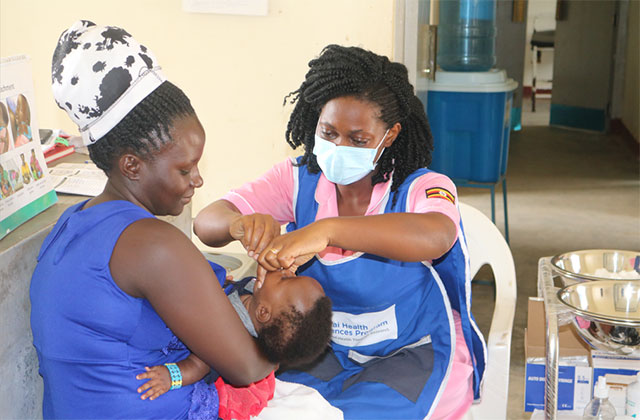
PHOTO/WHO-UGANDA COUNTRY OFFICE.
COMMENT | PETER OKWALINGA | On September 16th, Uganda joined the rest of the world to celebrate International Identity Day. To mark the occasion, NIRA took services closest to parents by conducting instant birth and National Identification Number (NIN) registrations at high-volume hospitals across the country. It was a symbolic, yet practical way of showing Uganda’s unmatched commitment to fulfilling Sustainable Development Goal (SDG) 16.9, which calls for legal identity for all, including birth registration, by 2030.
The world has made some progress in closing the identification gap, but the challenge remains enormous. According to the World Bank’s ID4D (Identity for Development) data, about 850 million people worldwide still lack a legal identification document. Of course, that’s a decline from around one billion in 2018, but it is still a staggering number. Without identification, millions of people are locked out of essential services like healthcare, education, voting, or even the right to own property. For those who dream of traveling, the lack of a recognized ID makes that dream impossible.
The problem is most pronounced in South Asia and Sub-Saharan Africa, where Uganda belongs. Together, these two regions account for about 78% of the world’s population without legal identity. Fortunately, the African Union, aware of these challenges, endorsed the Interoperability Framework for Digital ID in 2022 — a system designed to enable citizens to access services across the continent, have more control of their data, and build trust among national systems. Uganda, as a member state, cannot escape aligning with such frameworks.
But global policies aside, what matters most is how identification impacts our everyday lives here at home. No matter where or to whom we are born, every human being has the right to be recognized as a citizen of at least one country. For Ugandan children, that recognition starts with birth registration and issuance of a NIN. Without it, a child risks being left behind in ways that might not be obvious today but will certainly be overwhelmingly felt tomorrow.
Think about it practically. Imagine your child growing up without a NIN. When the time comes to sit national examinations, you start fidgeting. When they apply for a scholarship, the first requirement will be proof of identity. When there’s student government funding, its your child’s application being queried for lack of a NIN. Even something as excruciating as proof of age in legal proceedings over defilement — you’ve nothing to prove that yours is a child and so you deserve justice. Your child inheriting family property becomes impossible without proper identification.
Let’s be honest with ourselves: what excuse will you give if your child one day loses out on an inheritance, a scholarship, or a job simply because you failed to register them early enough? Will you blame the government? Or will you admit that you had the knowledge and opportunity but chose to ignore it?
NIRA’s decision to register births instantly at hospitals on International ID Day was one of the routine extensions. Ordinarily, the Authority could have relied on the ongoing National ID Mass Enrollment and Renewal Exercise at the parish level. That would have been the easy route. But in the wake of reality to eliminate exclusion and uphold human rights, NIRA chose to act differently — to seize the days’ opportunity and take services closer to breastfeeding mothers. This is the kind of commitment Uganda needs if we are to avoid contributing to the 850 million people globally without legal identity.
In its current (Mass enrolment) state NIRA has capacity to register every Ugandan if they showed up. Given 146 offices at the district level with mobile registration units deployed across parishes, operating Monday to Saturday, the distance between NIRA and the citizens is drastically shorter. But, only for six to ten months. And, there will be time when that distance will be costly and much stressful when NIRA retreats to district offices.
The real challenge now is not NIRA’s presence but citizens’ willingness to use the services available to them. Many parents delay registering their children, waiting until they urgently need an ID for school, illness or travel. Others claim they will “go when the child is older.” But delays only create unnecessary stress later. A free NIN, and a free birth certificate are issued within six months of birth. What’s your excuse nakawere?
As Ugandans, we should not wait for emergencies to push us into long queues or last-minute panic. Instead, we must act now. NIRA has brought services closer to our doorsteps. The next step is ours.
So, here is the challenge to every parent and guardian: what role have you played in ensuring your children, and those under your care are not part of the 850 million ‘unknown’ people in the world without any form of legal identification?
*****
 Peter Okwalinga works with NIRA
info@nira.go.ug
+256766501071 NIRA WHATSAPP NUMBER




🌍 Bushenyi District
Under President Mayambala Willy, jobs will rise from coffee, tea & milk factories in Ishaka & Kyamuhunga ✅.