The Independent Uganda: You get the Truth we Pay the Price


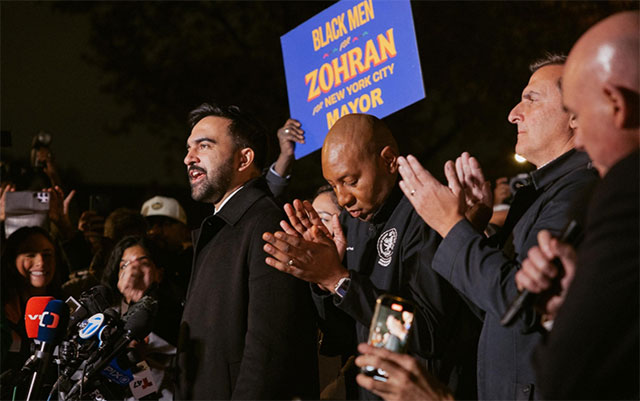
34 years from Kampala to New York city mayor
COVER STORY | JOSEPH WERE | The historic rise of Zohran Mamdani who was born in Kampala in 1991 to become the chief executive of the wealthiest and power-packed city in the world has excited Ugandans in the same way the rise of Barack Obama to become U.S. president did Kenyans.
When compared to Uganda, the statistics around New York City and Zohran’s new position are mind-boggling.
Zohran was an international superstar even before he became Mayor. It was headline news in America when Zohran announced in mid-July that he and his wife Rama Duwaji, whom he married in February, were travelling to Uganda to celebrate their marriage with family and friends. The position he now holds oversees a gigantic bureaucracy which impacts the daily lives and livelihoods of some 8.5 million people.
Zohran now heads a city with a GDP of US$1.3 trillion which is three times bigger than that of South Africa’s US$400 billion and Nigeria’s US$285 billion. These are the biggest economies in Africa. Uganda’s GDP is US$64 billion, Rwanda US$15 billion, Kenya US$136 billion and Tanzania US$88 billion.
“The mayor of New York City has enormous powers,” according to a report by CBS. It was quoting political expert J.C. Polanco, a professor at the University of Mount Saint Vincent in the Bronx, NY.
He told CBS: “Not only do they supervise a staff of over 300,000 people, a budget of over US$120 billion, a GDP of US$1.3 trillion — that’s bigger than 10 other countries. We’re in the top 10 in the world. Considering 1 million kids in our public schools, 10 million people at any given time, 30,000 cops, it’s a lot of power.
New York City has 123 billionaires, according to Forbes magazine, the highest of any city in the world. It is the business capital of the world. Zohran will manage New York City budget which for Fiscal Year 2025 is US$112.4 billion compared to the US$20 billion budget for Uganda.
He will oversee the New York City transport department, for example, that employs over 74,000 people, with a fleet of over 5,000 buses and is the largest in the United States. It operates 300 routes 24/7. The city has 794 roadway and pedestrian bridges carrying over 11 million passengers on an average weekday with over 850,000 vehicles.
He will also oversee the New York City Police Department (NYPD) which is the largest municipal police department in the U.S. and employs over 40,000 people, including more than 30,000 uniformed officers, 3,500 traffic enforcement agents, 4,500 auxiliary police officers, and 5,500 school safety agents with 9,000 CCTV cameras, 9,624 police cars, 11 boats, eight helicopters, and numerous other vehicles.
Such comparisons have led Ugandans to ask many questions, among them, whether Zohran will succeed. After all, he is just a 34-year old lad with a big beard, wide grin, and loud laugh. He first won a seat in the New York State Assembly (representing Astoria, Queens) in 2020. Assembly members hold the seat for two-year terms without limit. And the time there assures observers that Zohran will possibly be a very successful mayor.
Still, Ugandans have been asking mainly three other questions: First can the state of Uganda’s politics allow a youth like Zohran Mamdani to rise up, win a free and fair election, and wield such power? Secondly, does Ugandan society offer opportunities to soar and rise politically without impediments? Thirdly, can Ugandans really claim Zohran Mamdani the way Kenyans claimed Obama?
Land of opportunity
Zohran was born in Kampala in 1991; the same year his parents married. He moved to New York City 27 years ago when he was seven years old. At the time, President Museveni had been in power for 12 years. Zohran became an American citizen in 2018. Seven years later, he is mayor of the most powerful city in the world.
Zohran’s meteoric rise in American politics has pushed Ugandan politics into the global spotlight and the timing could not have been worse. It comes at the crest of Uganda’s five-year election cycle; a period of heightened state versus opposition tension, political campaigns, state excesses, and unwarranted vitriol.
Zohran’s win has heightened interest in the latest book authored by his famously cerebral father, 79-year old Prof. Mahmood Mamdani, the Ugandan of South Asian ancestry who for decades taught at Makerere University Kampala (MAK) before relocating to the U.S. He is known for founding the Centre for Basic Research (CBR) at MAK and for reportedly rejecting several offers to serve in President Yoweri Museveni’s government.
Zohran’s mother is the 68-year old Indian-American Academy-award nominated filmmaker, media entrepreneur, and activist, Mira Nair, who directed the famous 2016 Hollywood movie, Queen of Katwe, which was partly shot in Kampala and featured Ugandan actors. Zohran was the music supervisor on Queen of Katwe, a role that earned him a nomination from the Guild of Music Supervisors Awards.
Mira Nair is famous for other big films like Salaam Bombay! (1988), the Golden Lion-winning Monsoon Wedding (2001), and Mississippi Masala (1991). She also set up Maisha Film Lab in Kampala which trains East African film makers. In 2012, Nair was awarded India’s third highest civilian award, the Padma Bhushan, by then president of India, Pratibha Patil.

Prof. Mamdani’s new book is titled Slow Poison: Idi Amin, Yoweri Museveni, and the Making of the Ugandan State. In the book, Mamdani writes: “Idi Amin and Yoweri Museveni have been defined by their opposed relationship to tribalism: Amin as the father of the nation, and Museveni as one who has sought to resurrect tribe as a political identity and make it permanent.”
He adds: “The power to define and distinguish the “indigenous” from those not was the first lever of power wielded by post-independence governments. It was at the heart of the politics of “tribalism.” Though invented by Britain, we shall see that none perfected it as did Museveni.”
Mamdani uses anecdotes to colour his academic research. In one anecdote, Mamdani recounts an anecdote about Museveni. He writes: Never a shortage of anecdotal stories when it came to Museveni, one went like this. In the week after Mao’s death, Museveni was teaching at the Cooperative College. Before class began, he walked to the blackboard and wrote something like,
Marx was a great man. Marx is dead.
Lenin was a great man. Lenin is dead.
Mao was a great man. Mao too is dead.
I, too, am not feeling so well . . .
There was little reason to think of Museveni as modest.
The ‘Slow Poison’ in the title has been seized on as a “metaphor to describe the long-term, institutionalised corruption, division, and authoritarianism that he argues has eroded the possibility of genuine democracy in Uganda under Museveni’s decades-long rule.” It could also be a pun of a popular Kampala myth of “slow poison” being used to knock off political opponents. It was first publicly articulated by The Observer newspaper in an April 14, 2021 post.
Shunned by Museveni camp
Clearly conceived to conjure up controversy, Mamdani’s Slow Poison has quickly led most pro-government intellectuals to shun open discussions of its content. Mamdani writes that he has “come to question any claim of a single objective truth” but some people who have dared to comment demand it.
Uganda’s Permanent Representative to the United Nations, Adonia Ayebare is among those demanding objectivity.
On Nov. 2, just three days before Zohran won the New York City mayor election, the top diplomat wrote on X: “Just read “Slow poison: Idi Amin Amin, Yoweri Museveni and the making of the Ugandan state” by Professor Mamdani. It is strange that the good Professor comes up with this vile publication after 40 years. He conveniently leaves out cases where he asked for Government assistance when he was under fire for mismanagement remember @drstellanyanzi. Another case was when he was isolated by the AU panel investigating the killings in Darfur Sudan where he was a member and came up with a minority report that was deemed to white wash the genocide. The good Professor again approached the Ugandan delegation for diplomatic cover. Let’s have a 360 degrees.”
Robert Kabushenga, the former MD of Vision Group which owns The New Vision and other media businesses has described the book as “very different from the dispassionate almost technically structured & thoroughly academic work he has done before.” He says the book “articulates the leadership challenge of Uganda without necessarily justifying or even defending it.”
“Mahmood explodes the myths & carefully constructed narratives about the most consequential presidents of Uganda, Idi Amin & Museveni,” Kabushenga writes on his X column.
“In the book, you will get to understand Mahmood Mamdani’s journey. You will also appreciate the leadership of Amin & Museveni in ways we would not have without his assistance in his latest book,” he writes, “So if you have the courage, I recommend you drink all of his SLOW POISON. It will, at the very least, kill a lot of misconceptions.”
In contrast, opposition National Unity Platform (NUP) leader Robert Kyagulanyi Ssentamu aka Bobi Wine wrote on X: “Sending our hearty congratulations to @ZohranKMamdani upon beating all odds to get elected as the Mayor of New York City! From Uganda, we celebrate and draw strength from your example as we work to build a country where every citizen can realize their grandest dreams regardless of means and background”.
“It’s a big encouragement even to us here in Uganda that it’s possible,” Joel Ssenyonyi, the NUP spokesperson reportedly told Al Jazeera. The Katikkiro of Buganda, Charles Peter Mayiga,wrote on X: “If one dreams about touching the stars, one is likely to fly as high as the clouds. Good export from the Pearl of Africa.”
Opposed by the powerful
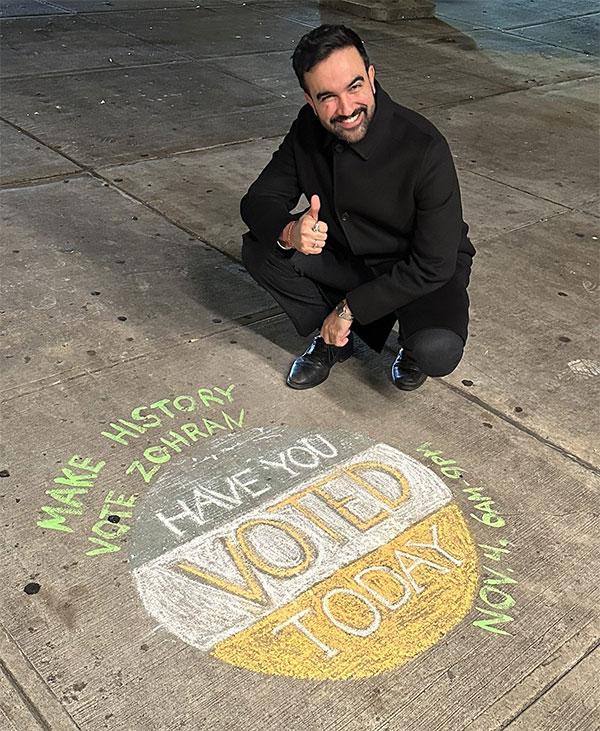
Zohran’s candidature was opposed at the highest levels of America’s political establishment. That is partly because Zohran’s message centered on ordinary people issues, including the high cost of living, food, rent and housing, and transport.
His Muslim religion and his platform as a social democratic, his stance on Israel (including vowing to arrest PM Benjamin Netanyahu), and a vow to raise taxes of the wealthy shook up the establishment and critics questioned his lack of experience. But his message appealed to young and progressive voters.
“I am young, despite my best efforts to grow older. I am Muslim. I am a democratic socialist. And most damning of all, I refuse to apologise for any of this,” he said.
In the end, Zohran defeated a Republican candidate Curtis Sliwa and former Gov. Andrew Cuomo, who ran as an independent after Zohran defeated him in the Democratic primary that he had initially entered as the clear front-runner.
President Donald Trump had endorsed Zohran’s main opponent, Cuomo, the night before the election.
“Whether you personally like Andrew Cuomo or not, you really have no choice,” Trump wrote. “You must vote for him, and hope he does a fantastic job. He is capable of it, Mamdani is not!”
Trump said publicly that it would be “hard” for him to give money to NYC if Mamdani is elected. He said he thinks Zohran is a “communist” and “far worse than a socialist.”
“It’s going to be hard for me as the president to give a lot of money to New York. Because if you have a communist running New York, all you’re doing is wasting the money you’re sending there,” the president said.
Zohran countered that the city will continue to receive federal funding with him as mayor, “not because of President Trump’s generosity. That’s because it is the law.” And so it will be – hopefully.
Trump did not block Zohran’s campaign or have him arrested. After Zohran’s win Trump said he is open to working with him. But he said Zohran needed to be “respectful” of Washington to succeed.
“We’ll help him, we’ll help him. We want New York to be successful. We’ll help him a little bit, maybe,” he said. “He has to be a little bit respectful of Washington, because if he’s not, he doesn’t have a chance of succeeding,” Trump said in an interview with Fox News.
Opposed by the rich
The world’s richest man, billionaire Elon Musk and other New York City CEOs and billionaire business leaders also spent more than US$40 million trying to stop Zohran from becoming the city’s next mayor. Billionaire hedge fund manager Bill Ackman spent some US$2 million.
“The universal (initial) reaction was, ‘Is this young man someone you would hire to run a 300,000 person corporation?’ And of course the answer was, ‘No way,'” says Kathryn Wylde, who runs the Partnership for New York City, an influential business group that represents more than 300 large employers. At one point in October, Elon Musk even called Zohran a ‘swindler’.
But, significantly, the billionaires did not ban Zohran from the Internet which they control. He continued to “rule” social media which has been singled out as a major contributor to his win. Matter of fact, when Elon Musk was asked to explain his accusation that Zohran is a “swindler,” he fumbled for words.
Even Kathryn Wylde conceded defeat.
“The Partnership works with whoever wins,” she said, “Zohran has won resoundingly, and so we will seek to be his partner in dealing with the challenges facing the city, which are considerable right now.”
Since Zohran’s win, speculation has shot up regarding the combined net worth of his parents. This could range from US$2 million to US$10 million, based on Mira Nair’s career as an acclaimed filmmaker and Mahmood Mamdani’s work as a Columbia University professor and author with an annual salary estimated between US$200,000 and $300,000. They live in Columbia-owned housing. As of 2025, Zohran Mamdani’s net worth is estimated to be between US$200,000 and US$300,000 a large portion of which comes from family land in Uganda, valued between US$150,000 and US$250,000.
Zohran is a rich man. As a member of the NYC Assembly, he was earning US$142,000 per year (about Shs40 million per month) plus per diem. That is about the same pay as a Ugandan MP. That is just slightly above the average household income in New York City which was US$127,894 per year, according to the U.S. Census Bureau’s 2023 American Community Survey (ACS) 5-Year Estimates. And New York is one of the most expensive cities in the world.
South Asian born in Kampala
Since his win, Zohran is being described as “the first South Asian mayor of New York.” That is different from former U.S. President Barack Obama who is described as the first African American president and could be claimed by Kenya.
CNN has also noted how, in his acceptance speech, Zohran quoted one of modern India’s founding fathers and walked off the stage to the sounds of a thumping Bollywood banger.
“We have been denied the limelight for a long time,” CNN quoted 48-year-old Gulfam Khan Hussain from the Indian city of Mumbai saying. It’s “really nice to see someone from the South Asian … origin has come this far,” artist Tanya Lalwani said.
CNN said Zohran’s victory places him at the forefront of a global cohort of diaspora leaders who have shattered political ceilings in recent years. In the US, Kamala Harris reached the second highest seat in government; across the Atlantic, Rishi Sunak became British Prime Minister, while Sadiq Khan secured the London mayoralty. Leo Varadkar led Ireland and Humza Yousaf headed Scotland’s government.